Building green that lasts: sustainable development in Nigeria
"Sustainable" has become one of the most overused words in real estate — stamped on brochures for estates that are anything but. So let's be precise about what it actually means, because in Nigeria the difference between a genuinely sustainable community and a greenwashed one is measured in your monthly bills, your comfort, and your property's value a decade from now.
Sustainability is an economic argument, not just a green one
Here is the part most people miss: sustainable infrastructure is not a moral luxury you pay extra for. It is the smartest long-term economics available to a homeowner in a country where the grid is unreliable, fuel is volatile, and climate stress is rising. A community built to run efficiently protects its residents from exactly the costs that erode everyone else's quality of life.
The greenest estate and the most affordable estate to live in are, over twenty years, the same estate.
The four systems that actually matter
1. Decentralised solar power
A shared solar grid changes the economics of daily life. Instead of every household burning diesel through a private generator — loud, dirty, and increasingly expensive — a community-scale solar system delivers cleaner, quieter, more predictable power. The environmental win is obvious; the financial win, compounded over years of fuel you never buy, is enormous.
2. Biogas — turning waste into energy
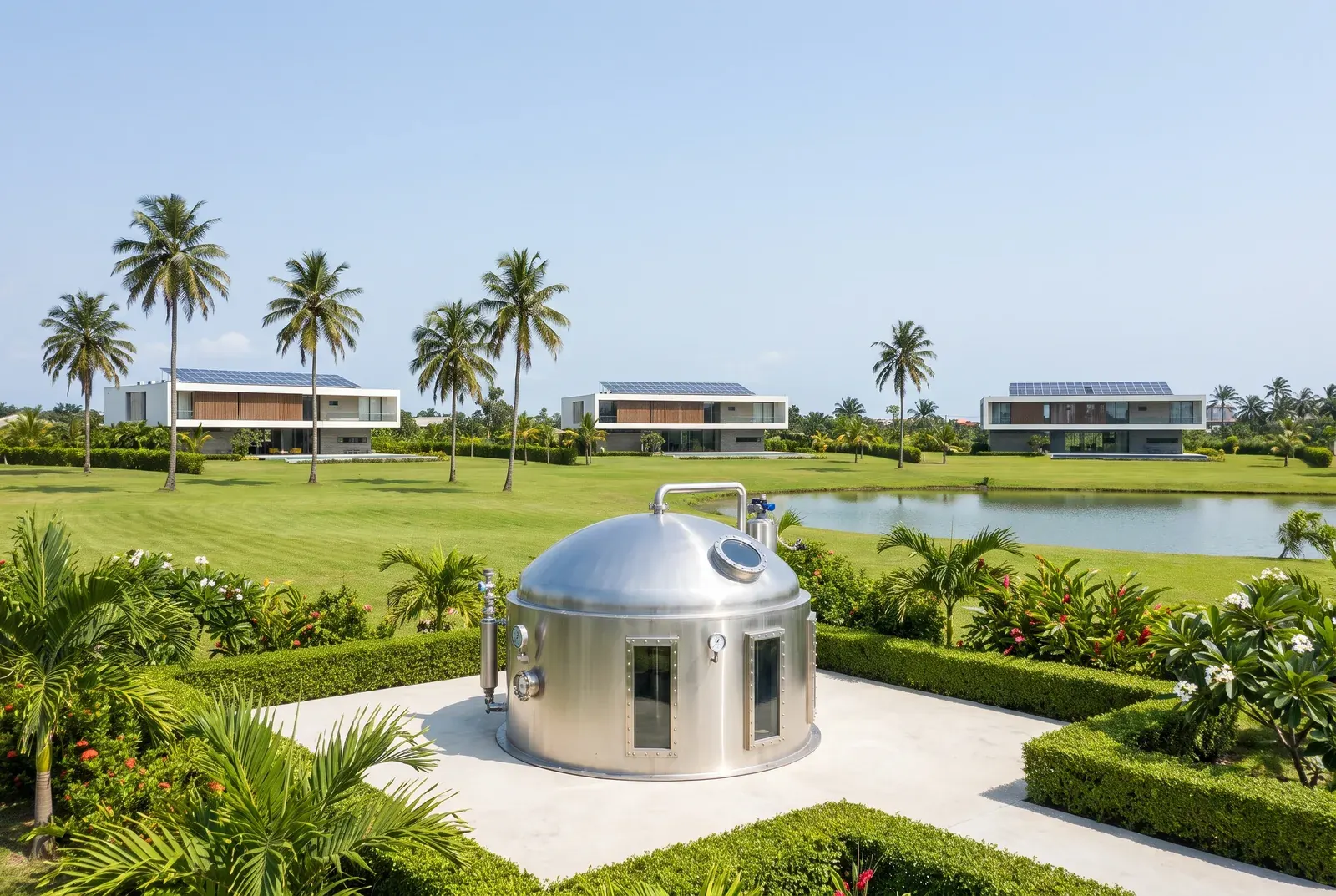
The organic waste a community produces every day — food scraps, garden clippings and more — is usually a cost and a nuisance. A biogas system turns it into an asset: digested on-site, it yields clean gas for cooking and energy plus nutrient-rich fertiliser for the estate's landscaping and Canopy Programme. Less waste hauled away, lower energy bills, and a genuinely circular estate that feeds itself. Good waste design is invisible when it works — and sorely missed when it's absent.
3. A living tree canopy
Trees are infrastructure. A maturing canopy cools streets and homes by several degrees, cutting the need for air-conditioning; it filters air, absorbs carbon, manages stormwater and lifts property values. An estate that commits to planting — and keeps planting — is building an asset that grows more valuable precisely as it grows older.
4. Smart, efficient homes
Sustainability at the building scale means orientation for daylight and breeze, smart-home controls that stop energy being wasted, and pre-wiring that lets homes get more efficient over time rather than less. Small design decisions, repeated across every home, add up to a community that simply consumes less to live better.
Why this holds value for a generation
Estates age in one of two directions. The unsustainable ones get more expensive and less pleasant to live in — costs climb, infrastructure strains, the shine wears off. The sustainable ones do the opposite: the trees fill in, the systems keep paying back, and the community becomes more desirable and more valuable with time. When you buy into the second kind, you are not just buying a home — you are buying an asset engineered to appreciate.
How we build it at Nexora
Every Nexora community is designed around this smart green infrastructure from day one: a shared decentralised solar grid, an on-site biogas energy system, smart-home pre-wiring, and the Nexora Canopy programme that puts premium trees in the ground at handover and keeps them growing. At ECO SAVANA, our master-planned resort estate in Omagwa, these systems aren't add-ons — they are the foundation the whole community is built on.
Because sustainable development, done properly, isn't about doing less harm. It's about building something good enough to last a generation — and worth more every year that it does.